2026 World Cup Venue · Miami Gardens, Florida

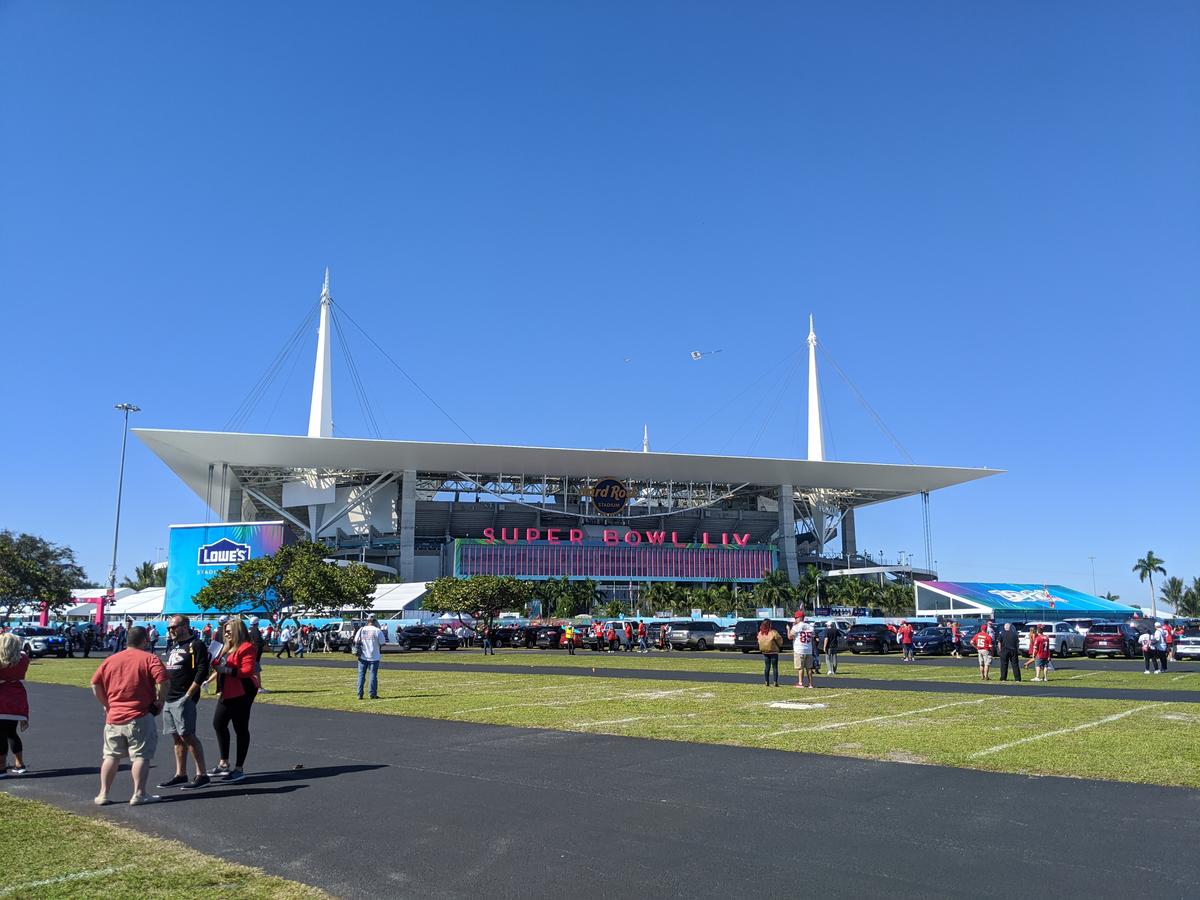
Hard Rock Stadium

Where football and passion are local languages. Hard Rock Stadium is Miami's open-air gem — a venue where Latin American, Caribbean, and American football cultures collide in the most electric atmosphere of the 2026 tournament.

Stadium Profile

  • Location: Miami Gardens, Florida, USA (north of Miami proper)
  • Official name: Hard Rock Stadium
  • Capacity: 65,300
  • Surface: Bermuda grass (natural)
  • Roof: Open-air (no roof)
  • Opened: 1987 (renovated extensively 2015–2017)
  • Home team: Miami Dolphins (NFL)
  • Coordinates: 25.9580° N, 80.2389° W

Venue Highlights

  • 🌴 Open-air tropical setting — Florida's warmth on full display
  • 🎵 Famous for concerts: Rolling Stones, U2, Madonna, Taylor Swift
  • 🏆 Hosted 6 Super Bowls (most of any venue)
  • ⚽ Regular host of major international football friendlies
  • 🎤 New name sponsorship from Hard Rock Cafe in 2015
  • 🔄 Massive renovation added a fixed roof structure over portions of seating

About the Stadium

Hard Rock Stadium opened in 1987 as Joe Robbie Stadium and has been the home of the Miami Dolphins ever since. It is one of the oldest venues in the 2026 World Cup rotation, but a major $500 million renovation completed in 2017 brought it fully into the modern era — adding a canopy roof over the seating bowl, new club levels, improved concession areas, and significantly upgraded media and hospitality facilities. The result is a venue that combines old-school Florida football atmosphere with contemporary world-class infrastructure.

The stadium sits in Miami Gardens — technically its own city within the Miami metro — approximately 15 miles north of downtown Miami. This location is important: Miami Gardens is one of the most culturally significant African-American and Caribbean communities in the United States, and the surrounding neighborhoods are a large reason why Miami is considered one of the most vibrant sports cities in America. The open-air design means the Florida climate — warm evenings, ocean breeze, occasional tropical humidity — will be part of the matchday experience throughout the tournament.

Miami has long been a second home for South American and Central American football. It regularly hosts major international friendlies, Copa América matches (including in 2016), and is the preferred US destination for pre-season tours by European and Latin American clubs. For the 2026 World Cup, Miami will draw enormous crowds from across the Americas — with the city's own Cuban, Venezuelan, Colombian, Brazilian, Argentinian, Haitian, and Jamaican communities ensuring that every match has the feel of a home game for someone.
Getting There

By Brightline Train (Recommended): Brightline's MiamiCentral station connects to Orlando and West Palm Beach, and is the gateway to Miami's transit system. From MiamiCentral, transfer to Metrorail and then the Miami Gardens Metrobus or a rideshare for the stadium. The train option is popular for events but requires careful timing.

By Rideshare: Uber and Lyft are the most practical options for most visitors. Dedicated event-day pickup/dropoff zones are on the north side of the stadium. From South Beach, expect a 30–45 minute journey in normal traffic, longer around matchday kick-off.

By Car: Limited on-site parking is available (pre-purchase required). Miami Gardens residential streets do not allow event parking. I-95 provides the main north-south access; the stadium is visible from the highway. Traffic is a genuine challenge on event days — plan for significant delays.

Nearby Attractions

South Beach: The iconic beach, Art Deco Historic District on Ocean Drive, world-class restaurants on Lincoln Road, and Miami's legendary nightlife. 25–40 minutes from the stadium by car.

Little Havana (Calle Ocho): Eight blocks of Cuban culture in Miami's SW 8th Street corridor. Domino Park, authentic Cuban coffee, cigar shops, and the rhythm of salsa. 20 minutes from the stadium.

Wynwood Walls: Miami's outdoor museum of street art and the creative district of galleries, boutiques, and craft breweries. 25 minutes from the stadium.

Florida Keys (Day Trip): The iconic Overseas Highway runs 110 miles from mainland Miami to Key West — one of the world's great drives. Feasible as a long day trip or overnight stay during the tournament.

Why Hard Rock Stadium Matters for the World Cup

No city in North America is more naturally suited to the World's Game than Miami. The city's demographics, its climate, its geography as the gateway between North and South America, and its culture of passionate celebration make it the perfect World Cup host. When Brazil or Argentina play in Miami, they are effectively playing at home — the crowd will not let them forget it.

The Hard Rock Stadium atmosphere during international football events has been described by players and coaches as among the best they have experienced outside of South America or Europe. The open-air setting, the tropical evening air, the Miami Gardens crowd that knows its football, and the sheer diversity of the city combine to create something genuinely special. The stadium's history — six Super Bowls, Taylor Swift concerts, major boxing matches — means it knows how to handle spectacle. The 2026 World Cup is simply the biggest spectacle of all.

← All host cities

Sports betting: mostbet.cc