2026 World Cup Venue · Mexico City, Mexico

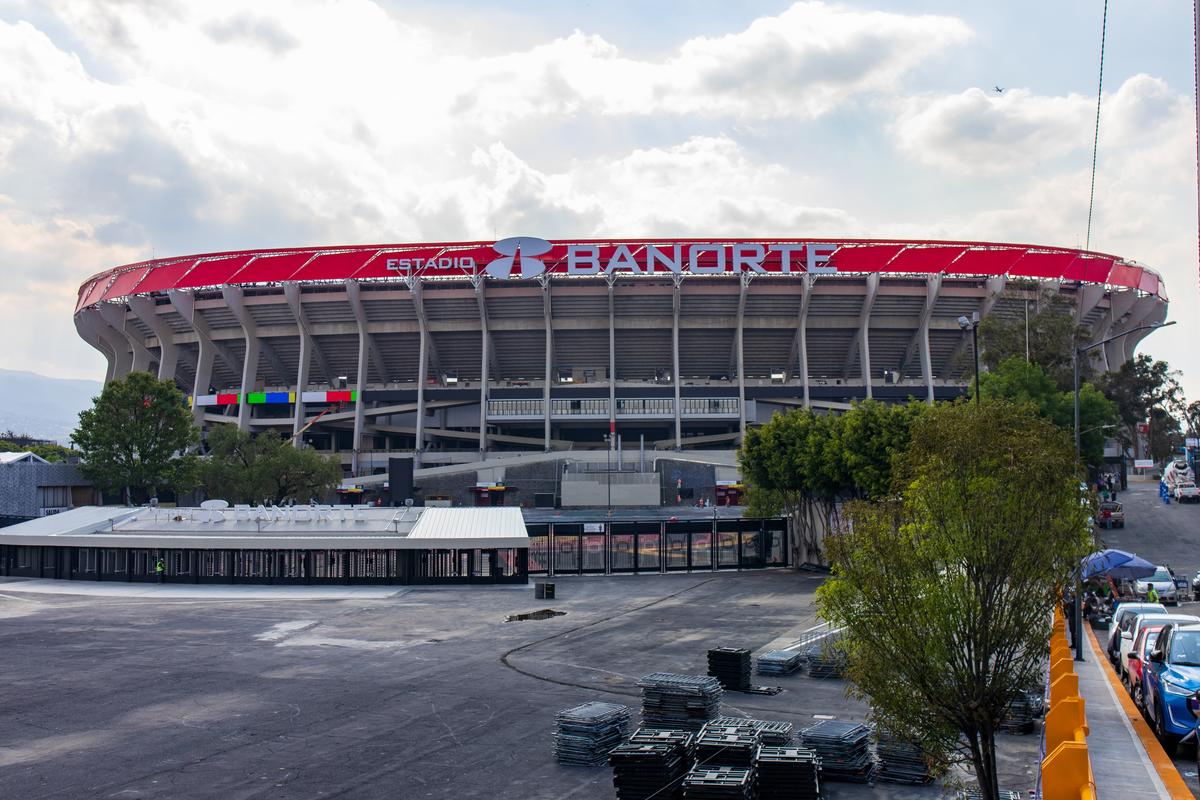
Estadio Azteca

The cathedral of football. Estadio Azteca is the only stadium in history to host two FIFA World Cup Finals — and it returns to the World Cup stage in 2026 as one of the most storied venues in the history of the game.

Stadium Profile

  • Location: Mexico City, Mexico (Coyoacán borough, south of centre)
  • Official name: Estadio Azteca (formerly Estadio Guillermo Meza)
  • Capacity: 87,523
  • Surface: Hybrid grass (Mexico's cool-season turf for tropical climate)
  • Roof: Partial roof cover over select seating sections
  • Opened: 1966
  • Home team: Club América (Liga MX)
  • Coordinates: 19.3029° N, 99.1505° W

Venue Highlights

  • 🏆 Only stadium to host TWO FIFA World Cup Finals (1970 and 1986)
  • ⚽ Pelé's final international match was played here (1971 exhibition)
  • ⚽ Diego Maradona's greatest performance: 4th goal vs England (1986 Quarter-final)
  • 💚 Home of Club América — Mexico's most decorated club
  • 🌡️ High altitude: ~7,200 feet (2,200m) — climate and fitness factor
  • 🏙️ Mexico City's restaurant, museum, and nightlife within 30 minutes

About the Stadium

Estadio Azteca opened in 1966 and immediately established itself as the defining venue of Mexican football. Its first World Cup came in 1970, when it hosted three group matches, both semi-finals, and the Final — in which Pelé lifted the Jules Rimet Trophy for the third and final time before Brazil permanently retained the old trophy. It was here that Pelé played his final international match in Mexico the following year, and it was here that the 1986 World Cup returned to write a new chapter in the stadium's legend: Diego Maradona's quarter-final against England, his two-goal salvo that included the infamous Hand of God and the sublime Goal of the Century, played out on Azteca's turf.

Mexico City sits at approximately 7,200 feet (2,200 metres) above sea level — classified as a high-altitude environment. This altitude has been a defining factor in every major tournament held here: the thinner air makes the ball travel further and faster, reduces players' aerobic capacity, and requires a significant acclimatisation period for athletes accustomed to sea-level competition. FIFA's medical committee has long monitored altitude effects, and for the 2026 tournament, proper altitude acclimatisation will be essential for teams not based at altitude year-round. Mexican clubs and national team players have a natural advantage.

The stadium is located in the Coyoacán borough, south of Mexico City's historic centre, in a residential area close to the UNAM (National Autonomous University of Mexico) campus. It is well-connected by the Mexico City Metro system — Line 2 serves the Estadio Azteca station directly. The surrounding neighborhood has a distinctive character: local taquerías, markets, and the quiet residential streets of southern Mexico City contrast with the enormous energy that erupts on match days.
Getting There

By Metro (Recommended): The Mexico City Metro is one of the world's great urban transit systems — fast, frequent, and covering the entire metropolitan area. Line 2 (north-south blue line) serves Estadio Azteca station, literally at the stadium's doorstep. From the historic Zócalo (city centre): approximately 25 minutes. From the Condesa/Roma districts: approximately 30 minutes via Line 1 and a transfer at Chapultepec.

By Rideshare (Uber / DiDi): Fully available throughout Mexico City. Rideshare is widely used and significantly cheaper than in US cities. Estadio Azteca is in a dense residential area; streets around the stadium are closed to general traffic on match days, with designated drop-off points a short walk from the gates.

By Metrobús: Line 4 of the Metrobús BRT system runs along Insurgentes Sur and stops near the stadium. Mexico City's BRT system is clean, air-conditioned, and significantly faster than cars on congested routes.

Nearby Attractions

Coyoacán: One of Mexico City's most beloved neighborhoods — colonial streets, the iconic Azul restaurant chain (where Frida Kahlo's ashes are kept), the Coyoacán Market, and the Frida Kahlo Museum (Casa Azul). A 10-minute walk from the stadium.

Centro Histórico & the Zócalo: The historic heart of Mexico City — the main square is the largest in the Western Hemisphere. The Metropolitan Cathedral, Templo Mayor, Palacio Nacional (with Diego Rivera's famous murals), and the Presidential Palace are all here. A UNESCO World Heritage Site.

Chapultepec Park & Castle: One of the largest city parks in the Western Hemisphere, larger than Central Park. Chapultepec Castle sits atop the hill within the park — a former royal residence and now a museum with extraordinary city views.

Xochimilco Floating Gardens: UNESCO World Heritage canals and floating gardens of the ancient Aztec chinampas. colourful trajineras (flat-bottomed boats) offer a unique and lively afternoon experience on the southern edge of the city.

Why Estadio Azteca Matters for the World Cup

Estadio Azteca is not merely a venue — it is a monument to the global reach of football. Few stadiums anywhere in the world carry the historical weight that Azteca does: Pelé and Garrincha in 1970, Maradona in 1986, and now a new generation of stars in 2026. The fact that Mexico City is one of the world's great metropolises — a city of 22 million people with extraordinary culture, food, art, and history — makes the tournament's return here something truly special. This is not just a World Cup host city; it is a football city in the deepest sense.

For Mexico's national team — El Tri — playing at Estadio Azteca in a World Cup is the pinnacle of their sporting existence. The Mexican fans who will fill those 87,000 seats will be among the most passionate in world football, and the atmosphere at every match will be amplified by the stadium's unique bowl shape and the collective memory of everything this ground has witnessed. For players from other nations, playing at Estadio Azteca is an experience they will never forget — the altitude, the noise, the history, and the sheer weight of expectation from 87,000 fans who know exactly what this stadium means.

← All host cities

Sports betting: mostbet.cc