2026 World Cup Venue · Houston, Texas

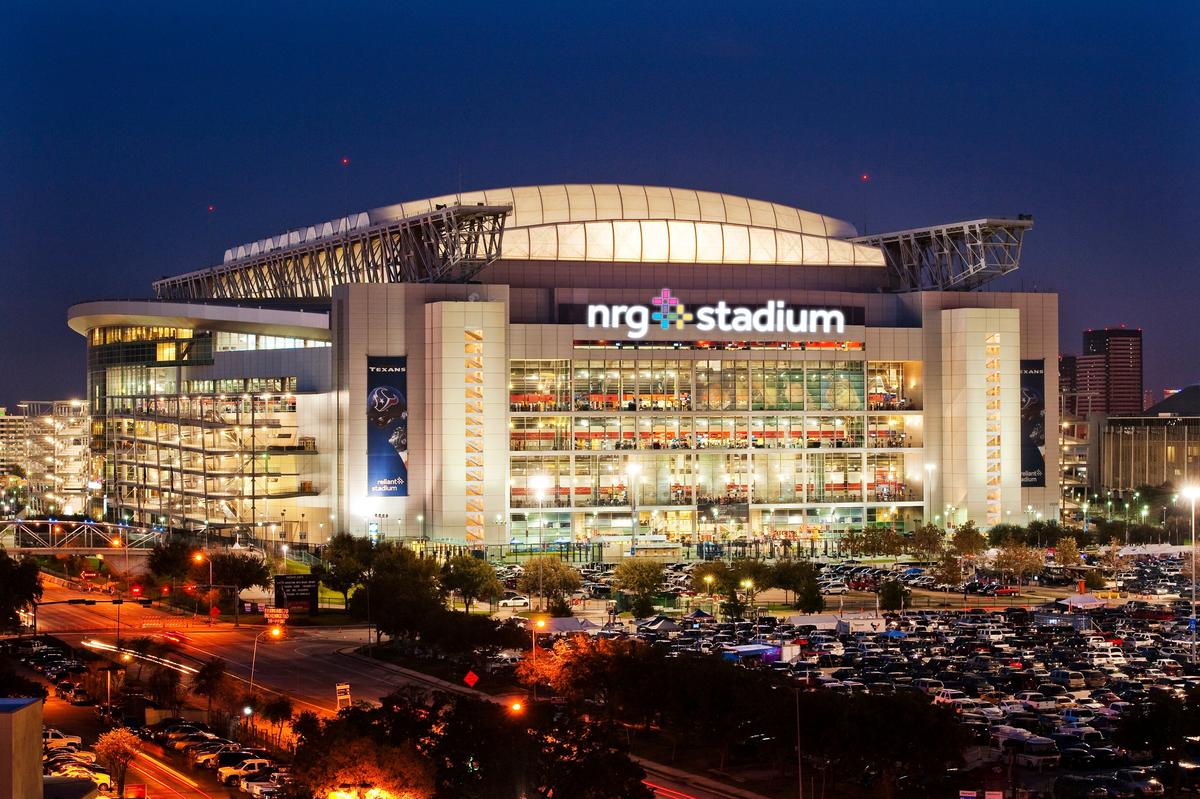
NRG Stadium

The most internationally diverse major city in the United States hosts the World Cup in one of its most impressive venues. NRG Stadium brings a retractable roof, natural grass, and Houston's extraordinary multicultural fabric to the 2026 tournament.

Stadium Profile

  • Location: Houston, Texas, USA (near Texas Medical Center)
  • Official name: NRG Stadium
  • Capacity: 72,220
  • Surface: Natural grass (Bermuda, switchable tray system)
  • Roof: Retractable (two large panels, opens in under 10 minutes)
  • Opened: 2002
  • Home team: Houston Texans (NFL)
  • Coordinates: 29.6847° N, 95.4107° W

Venue Highlights

  • 🏈 Home of the Houston Texans (NFL) since 2002
  • 🏀 Hosted the NCAA Final Four championship games multiple times
  • 🌟 Hosted Super Bowl LI (2017) — the historic Patriots/Falcons overtime game
  • 🌾 One of the largest retractable roof stadiums in the US
  • 🍜 Minutes from Houston's legendary restaurant corridor on Montrose and Westheimer
  • 🌡️ Climate-controlled interior despite open-air pitch option

About the Stadium

NRG Stadium opened in 2002 as the home of the brand-new Houston Texans franchise — the NFL's first entirely new team since 1976. Its most striking feature is the fully retractable roof: two massive panels slide open in under 10 minutes to expose the natural Bermuda grass pitch to the Texas sky, or close to create a climate-controlled environment. This dual capability is particularly valuable in Houston's climate, where summer temperatures can reach well above 90°F (32°C) and tropical humidity is common. The ability to close the roof during the heat of a Texas afternoon while offering open-air evenings creates optimal conditions for both players and fans.

Houston is the fourth-largest city in the United States by population and arguably the most culturally diverse. The Houston metropolitan area is home to extraordinarily large communities from Mexico, Central America, South America (especially Venezuela, Brazil, and Argentina), the Middle East (Lebanon, Iraq, Iran), South Asia (India, Pakistan), and Southeast Asia (Vietnam, Philippines). This diversity makes Houston one of the most genuinely international cities in America — and a natural World Cup host, where every participating nation will have a significant local rooting interest.

The stadium sits in the NRG Park complex in the Texas Medical Center district, adjacent to the Houston Astrodome (now demolished) and near the city's major museum district. Houston's two major airports — George Bush Intercontinental (IAH) and William P. Hobby (HOU) — provide extensive domestic and international connectivity, with direct flights to Latin American destinations that few other US cities can match.
Getting There

By METRORail (Recommended):

Houston's METRORail Red Line has a station at NRG Park (NRG Stadium station), connecting the stadium to downtown Houston, the Museum District, and the Texas Medical Center. The Red Line runs along Fannin Street adjacent to the stadium. From downtown (Main Street Square): approximately 15 minutes. METRORail is the most reliable matchday option.

By Rideshare: Uber and Lyft are fully operational in Houston with designated pickup/dropoff zones on the east side of the stadium on Fannin Street. Traffic on I-610 and Main Street approaches the NRG Park area can be congested in the 90 minutes before kick-off.

By Car: On-site parking is available in the NRG Park garages and lots but must be pre-purchased for major events. Parking costs vary significantly. Driving in Houston is strongly car-centric; the city has limited walkability outside of downtown and the Inner Loop. From central Houston: approximately 15–20 minutes by car in normal traffic.

Nearby Attractions

Houston Museum District: 18 museums within a 1.5-mile radius of downtown — including the Museum of Fine Arts, Houston Museum of Natural Science, and the Menil Collection. One of the largest museum concentrations in the United States.

The Houston Space Center (NASA): One of Houston's most iconic attractions — the Johnson Space Center where NASA's mission control is located, 25 miles southeast of downtown. A genuinely world-class space exploration museum.

Montrose & The Heights: Houston's most vibrant cultural neighborhoods. Montrose is famous for its eclectic mix of restaurants (extraordinarily diverse), bars, galleries, and nightlife. Westheimer Road in Montrose is essentially a continuous restaurant from downtown to the Inner Loop.

Galveston Beach: Texas's most accessible beach destination — 50 miles from downtown Houston on the Gulf of Mexico. A popular day trip during a World Cup visit to Houston.

Why NRG Stadium Matters for the World Cup

No American city brings more global diversity to a World Cup host city than Houston. The city is not just large — it is genuinely international in a way that goes beyond demographics. Houston's Mexican community is enormous and deeply rooted; its Venezuelan, Colombian, and Brazilian populations have grown rapidly in the 21st century; its Arab and South Asian communities are among the largest in the country. When Argentina or Brazil plays a World Cup match in Houston, the stadium will feel like a home game for both sides simultaneously — and that is entirely characteristic of the city.

NRG Stadium itself is a proven World Cup-class venue. Its host of Super Bowl LI — the famous 25-point Patriots comeback — was one of the most dramatic NFL games ever played, and the stadium handled the largest single sporting event in Houston's history with ease. The retractable roof means that whatever June and July weather Texas delivers, FIFA has the ability to control the indoor environment while preserving the option of open-air football. It is a venue built for exactly this kind of global event.

← All host cities

Sports betting: mostbet.cc